Featured
Table of Contents
In 2026, the most successful startups use a barbell strategy for consumer acquisition. On one end, they have high-volume, low-intent channels (like social media) that drive awareness at a low cost. On the other end, they have high-intent, high-cost channels (like specialized search or outgoing sales) that drive high-value conversions.
The burn several is a vital KPI that measures how much you are spending to create each brand-new dollar of ARR. A burn numerous of 1.0 methods you spend $1 to get $1 of brand-new revenue. In 2026, a burn multiple above 2.0 is an instant warning for investors.
Revolutionizing Development for New York B2B OrganizationsPrices is not just a financial decision; it is a strategic one. Scalable startups typically utilize "Value-Based Prices" instead of "Cost-Plus" designs. This means your cost is connected to the amount of cash you conserve or make for your consumer. If your AI-native platform conserves an enterprise $1M in labor expenses annually, a $100k annual subscription is an easy sell, regardless of your internal overhead.
Revolutionizing Development for New York B2B OrganizationsThe most scalable organization ideas in the AI space are those that move beyond "LLM-wrappers" and build proprietary "Inference Moats." This suggests using AI not simply to generate text, however to enhance complicated workflows, forecast market shifts, and provide a user experience that would be impossible with standard software application. The increase of agentic AIautonomous systems that can carry out complex, multi-step taskshas opened a brand-new frontier for scalability.
From automated procurement to AI-driven job coordination, these agents enable an enterprise to scale its operations without a corresponding increase in functional complexity. Scalability in AI-native startups is frequently an outcome of the data flywheel impact. As more users communicate with the platform, the system collects more exclusive information, which is then utilized to refine the models, resulting in a better product, which in turn brings in more users.
Essential Factors for Profitable B2B Scaling
Workflow Integration: Is the AI ingrained in a way that is necessary to the user's everyday tasks? Capital Performance: Is your burn numerous under 1.5 while maintaining a high YoY development rate? This takes place when a company depends entirely on paid ads to acquire brand-new users.
Scalable business concepts prevent this trap by developing systemic circulation moats. Product-led development is a strategy where the product itself serves as the primary driver of customer acquisition, expansion, and retention. When your users end up being an active part of your item's development and promo, your LTV increases while your CAC drops, producing a formidable economic advantage.
Maximizing SEO Performance in B2B Niches
For instance, a start-up building a specialized app for e-commerce can scale quickly by partnering with a platform like Shopify. By integrating into an existing community, you gain instant access to a massive audience of potential clients, substantially minimizing your time-to-market. Technical scalability is typically misunderstood as a purely engineering issue.
A scalable technical stack enables you to deliver features faster, preserve high uptime, and minimize the expense of serving each user as you grow. In 2026, the baseline for technical scalability is a cloud-native, serverless architecture. This approach enables a startup to pay just for the resources they use, making sure that facilities costs scale perfectly with user need.
A scalable platform needs to be developed with "Micro-services" or a modular architecture. While this adds some preliminary intricacy, it prevents the "Monolith Collapse" that frequently happens when a start-up attempts to pivot or scale a stiff, legacy codebase.
This surpasses simply writing code; it includes automating the screening, release, tracking, and even the "Self-Healing" of the technical environment. When your infrastructure can automatically spot and repair a failure point before a user ever notifications, you have actually reached a level of technical maturity that permits for genuinely global scale.

Understanding Role for AI in Marketing Efforts
A scalable technical structure consists of automated "Model Monitoring" and "Constant Fine-Tuning" pipelines that ensure your AI remains precise and effective regardless of the volume of demands. By processing data better to the user at the "Edge" of the network, you lower latency and lower the problem on your central cloud servers.
You can not handle what you can not determine. Every scalable company concept must be backed by a clear set of efficiency signs that track both the current health and the future capacity of the endeavor. At Presta, we help founders establish a "Success Control panel" that concentrates on the metrics that in fact matter for scaling.
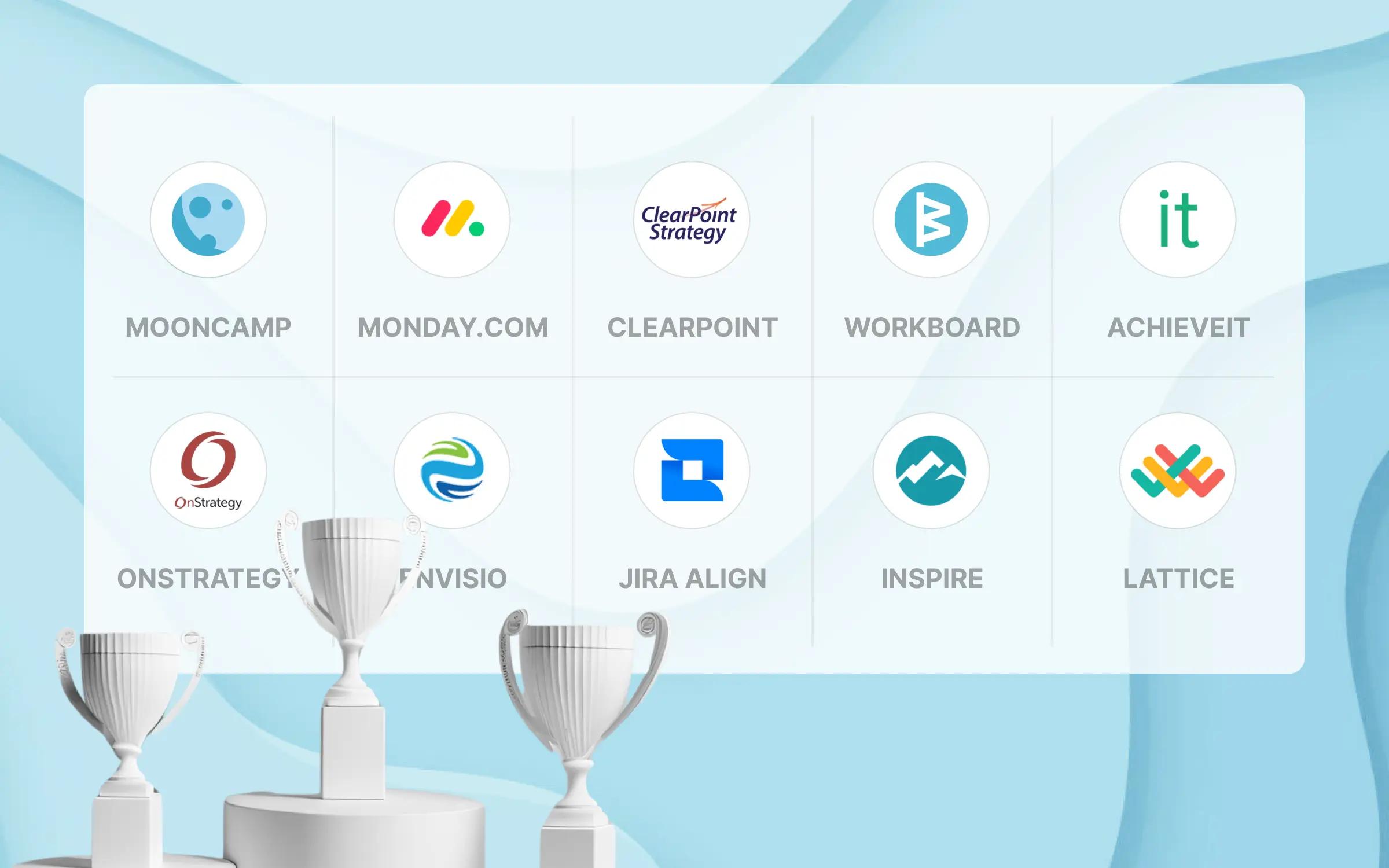
By day 60, you need to be seeing the very first indications of Retention Trends and Repayment Duration Reasoning. By day 90, a scalable startup must have sufficient information to prove its Core System Economics and justify additional financial investment in development. Profits Growth: Target of 100% to 200% YoY for early-stage ventures.
Effective Sales Support Strategies for Global Teams
NRR (Net Revenue Retention): Target of 115%+ for B2B SaaS designs. Guideline of 50+: Combined development and margin portion need to exceed 50%. AI Operational Leverage: At least 15% of margin enhancement must be directly attributable to AI automation.
The primary differentiator is the "Operating Leverage" of the business model. In a scalable company, the limited cost of serving each brand-new consumer reduces as the business grows, resulting in expanding margins and greater profitability. No, lots of startups are really "Way of life Services" or service-oriented models that do not have the structural moats necessary for real scalability.
Scalability needs a particular alignment of innovation, economics, and distribution that permits the service to grow without being restricted by human labor or physical resources. Determine your projected CAC (Client Acquisition Expense) and LTV (Life Time Value).

Latest Posts
How Automated Development Impact Frameworks in 2026?
Navigating Complex Generative Search Discovery for Higher ROI
Proactive Tech Integration Within Large Enterprises